Skip to content
Rasodaya
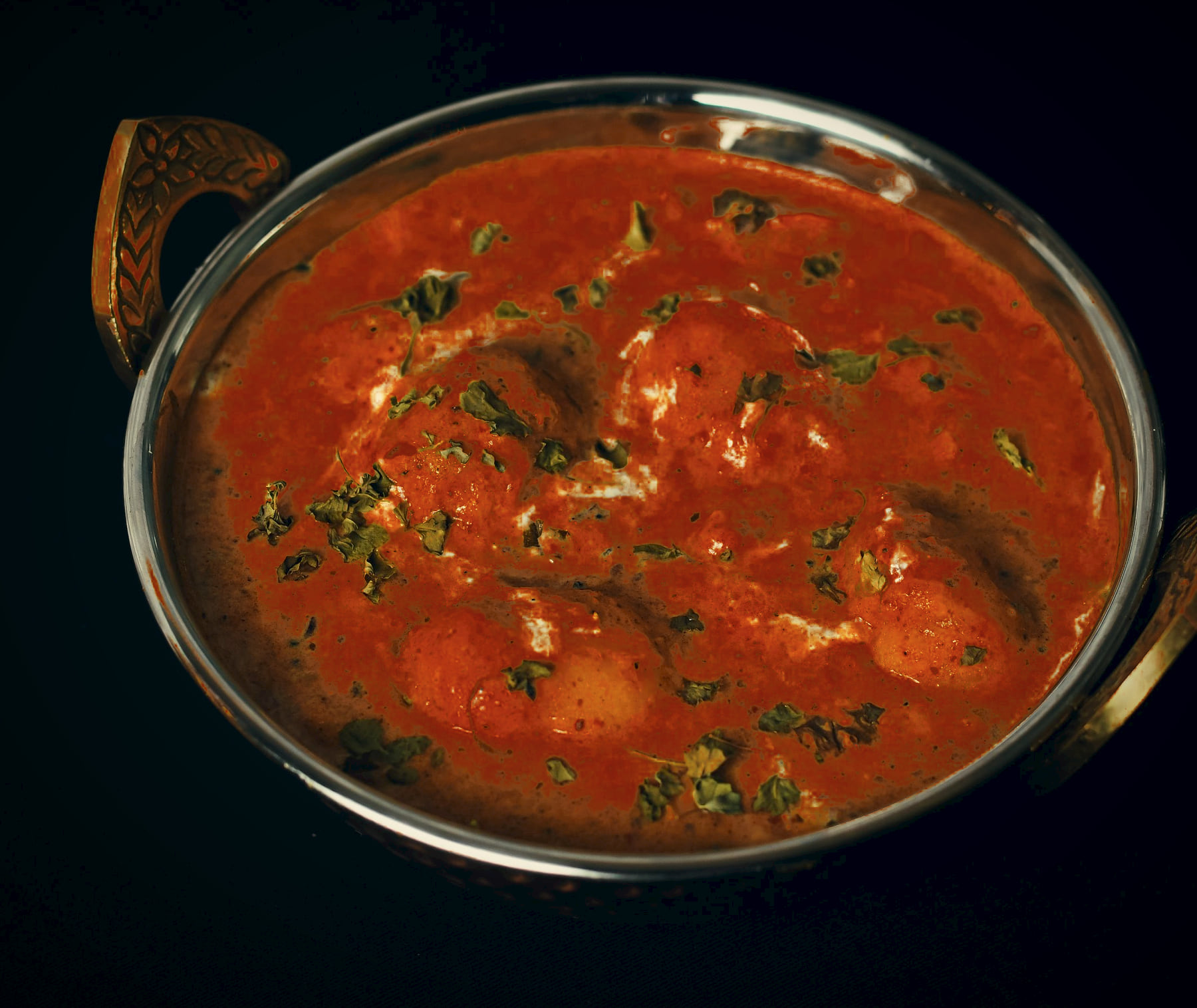
On the cover: Kashmiri Dum Aloo

The MenuFive collections

Fifteen dishes,each labelled for what it is.

Familiar favourites made carefully, regional studies, one reinterpretation and one guest from the coast.

There are no prices here yet. Ordering is through our delivery partners.

Every dish carries one label

Reinterpreted
01
House Signature
01
Regional
04
Familiar Favourite
08
Guest Table
01

Collection I. Four dishes

Signatures

The four dishes that explain us best. One reinterpretation, one house signature and two regional studies.

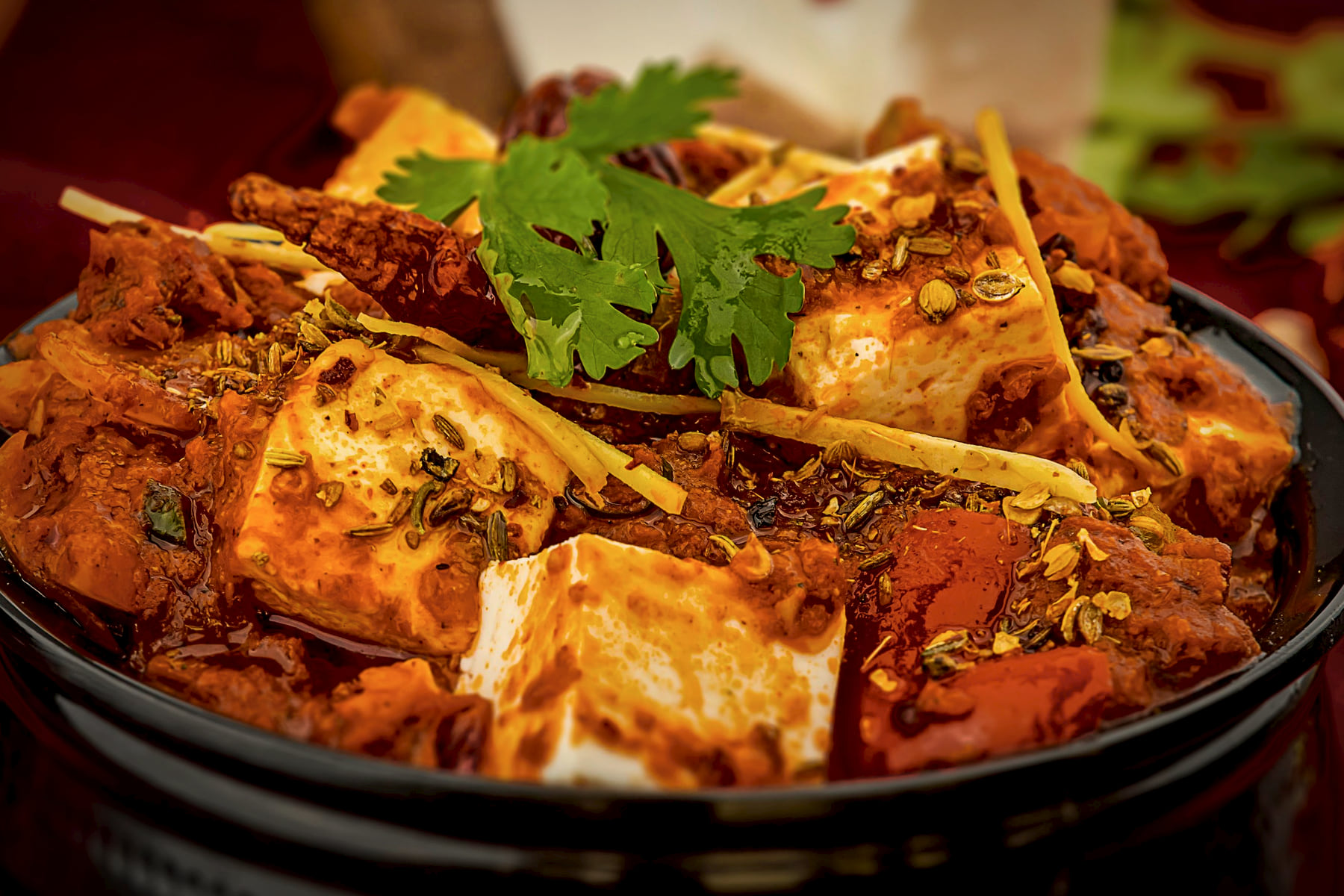
Paneer in a deep mahogany gravy in a dark hammered handi, finished with ginger julienne and coriander

01Reinterpreted

Paneer Nihari

Mahogany depth, slow warmth, a bright finish.

A vegetarian interpretation built around the warmth, spice and slow depth associated with Nihari.

Nihari is traditionally a slow-cooked meat stew, long associated with the kitchens of Delhi and Lucknow. Ours is a deliberate reinterpretation: rebuilt around paneer, while keeping the patience, the warmth and the mahogany depth of the flavour profile.

In the kitchen
The gravy is built slowly and the paneer joins it late, so it stays tender.
Origin
Delhi & Awadh
Pairs with
Missi Roti
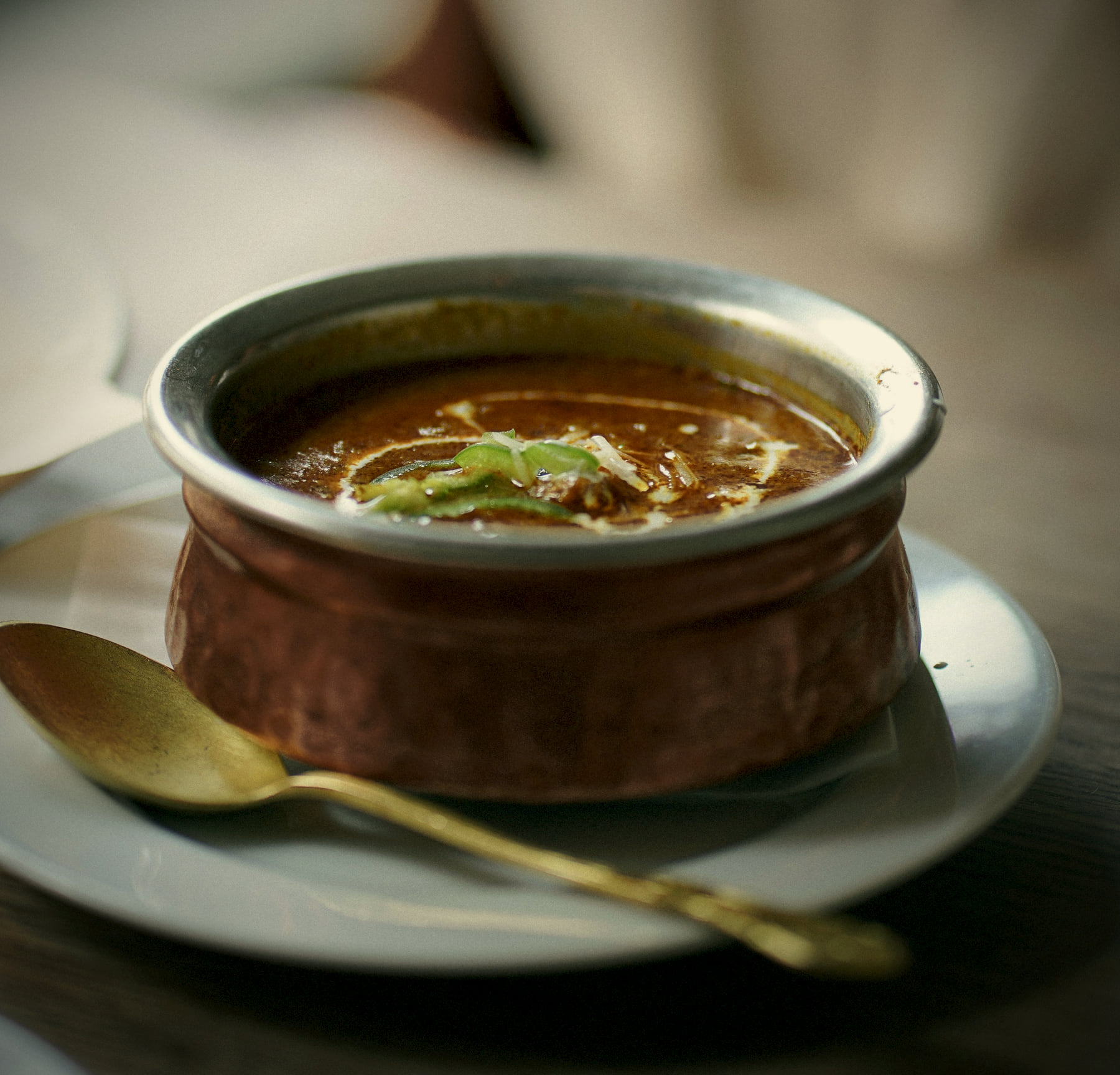
Glossy black dal in a hammered copper handi on an ivory saucer, with a brass spoon beside it

02House Signature

House Black Dal

Deep, glossy, quietly smoky.

Slow-cooked. Patiently finished. Made to linger.

We call it ours because we intend to keep refining it for as long as we cook. It is the dish we taste most often, and change least lightly.

In the kitchen
Whole black lentils, given the time they ask for and finished with restraint.
Origin
The Punjab table
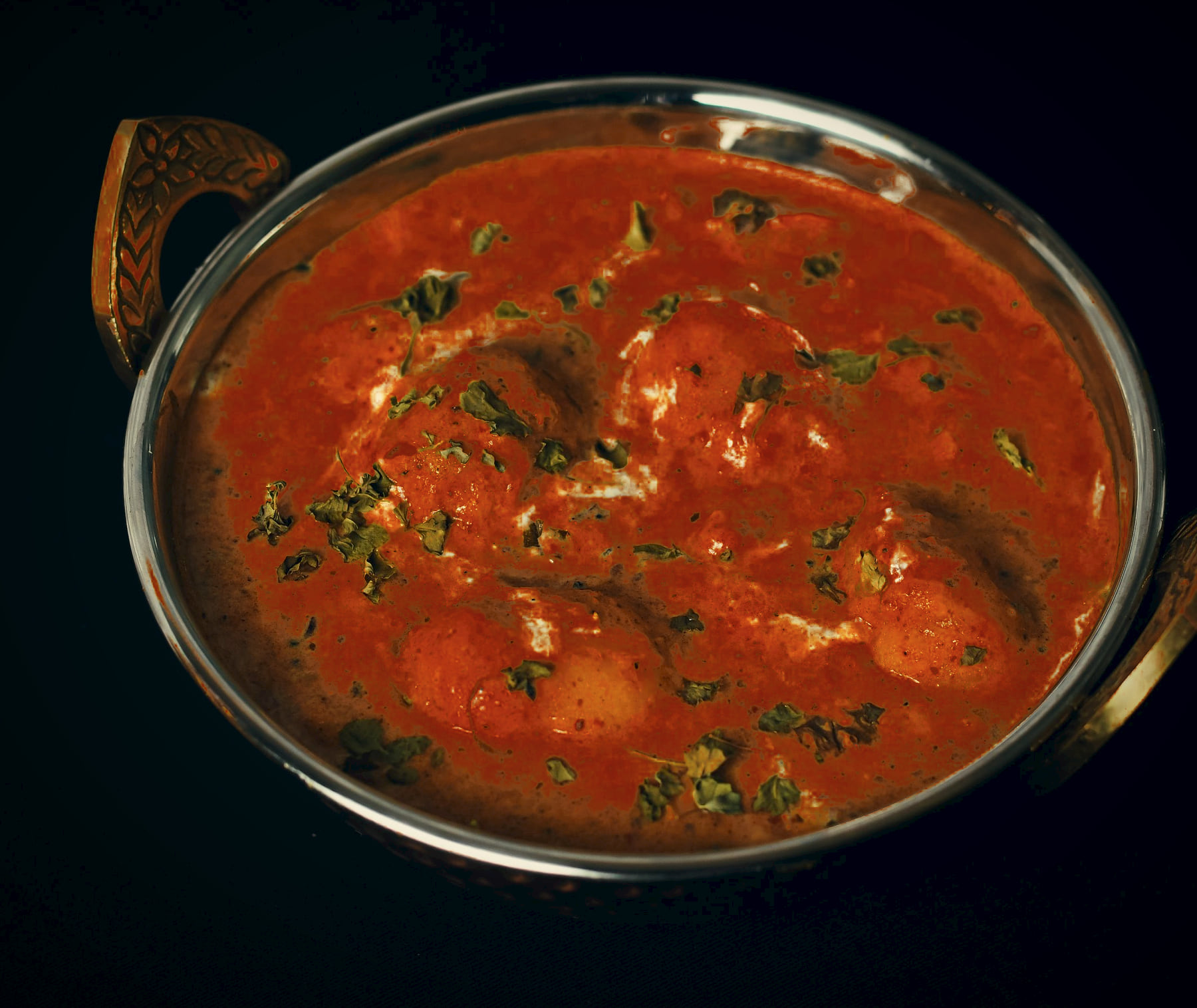
Whole small potatoes in a deep Kashmiri red gravy in a brass-handled kadai

03Regional

Kashmiri Dum Aloo

Colour without fury. Fennel, dried ginger, gentle heat.

Small potatoes in a deep red gravy, with the character of Kashmir guiding the plate.

In the Kashmir Valley, dum aloo is a slow-cooked dish of small potatoes in a yoghurt-based gravy, coloured by Kashmiri chillies and warmed by fennel and dried ginger. That character is our guide.

In the kitchen
Colour comes from Kashmiri chilli, which brings redness long before it brings heat.
Origin
Kashmir
Pairs with
Jeera Basmati
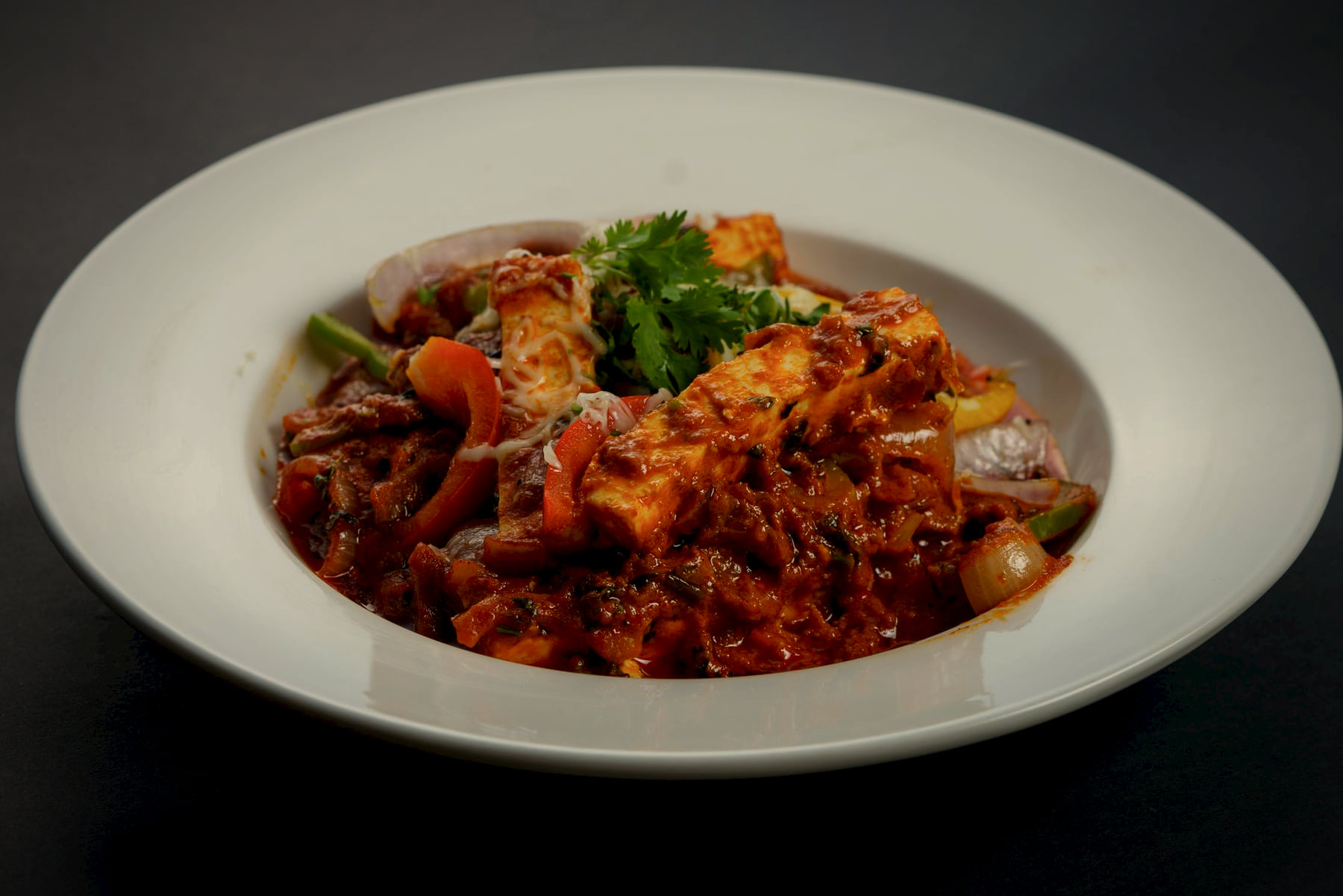
Paneer with onions and peppers in a dark, textured masala, in a wide ivory bowl

04Regional

Lahori Paneer

Robust, onion-sweet, made for bread.

Generous pieces of paneer in a darker, coarser masala than its familiar cousins. Named for Lahore, and for the open-handed cooking of the wider Punjab.

We will say more about this dish once it has finished teaching us. For now, it is rich without being heavy, and it asks for bread.

In the kitchen
Onions are taken deep before the tomato goes in, which gives the masala its colour and body.
Origin
The wider Punjab
Pairs with
Tandoori Roti

Collection II. Five dishes

Familiar Favourites

Dishes you already know. We are not trying to surprise you with them, only to make them properly.

  1. Paneer in a glossy orange-red masala in a handled ivory ceramic bowl

    Familiar Favourite

    Paneer Butter Masala

    Tomato, butter, gentle spice. Glossy and balanced.

    You know this dish. That is exactly why it deserves care.

    In the kitchen
    Tomato cooked until its sharpness settles, then butter, and no more sweetness than it needs.
    Origin
    The North Indian table
    Pairs with
    Tandoori Roti
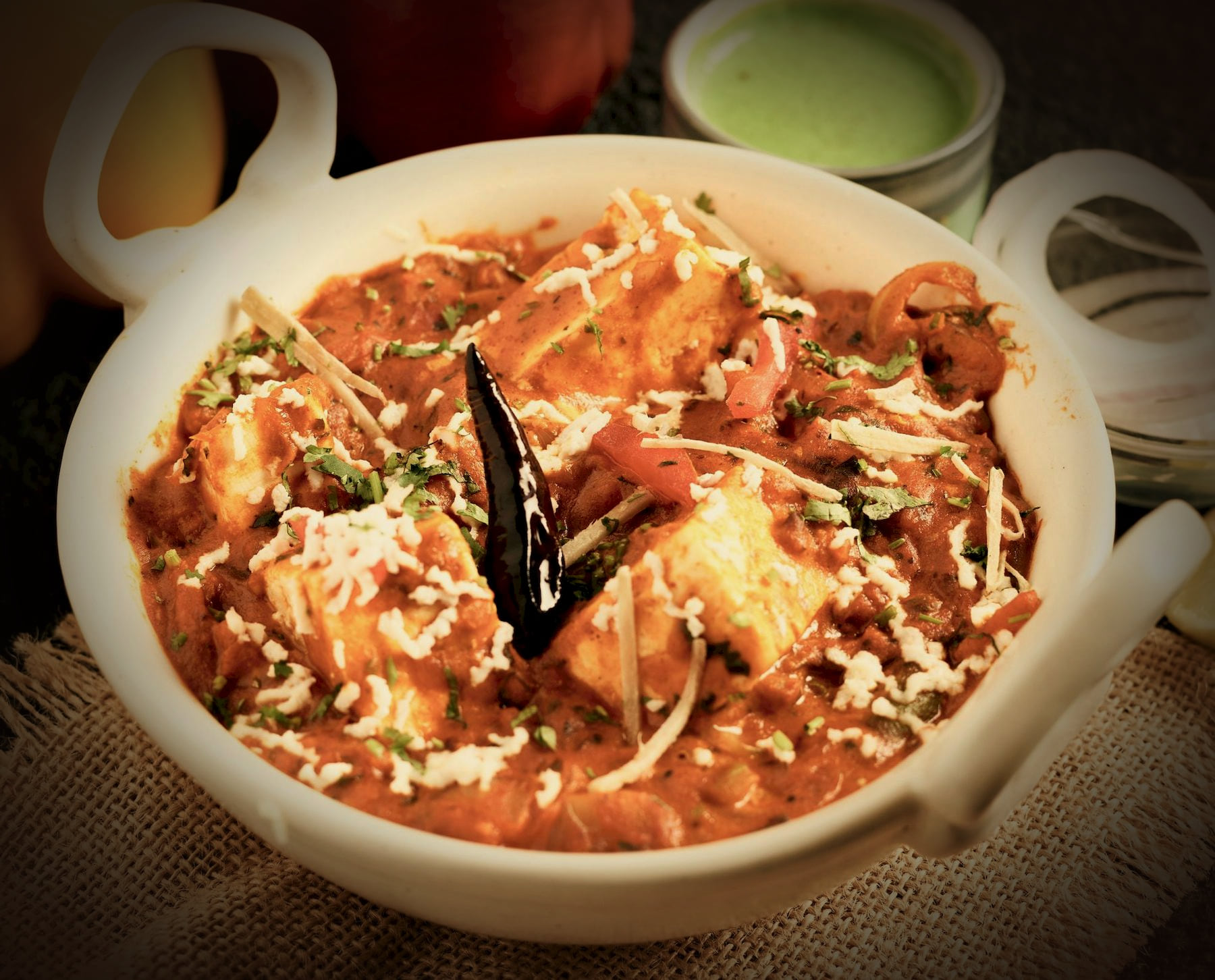
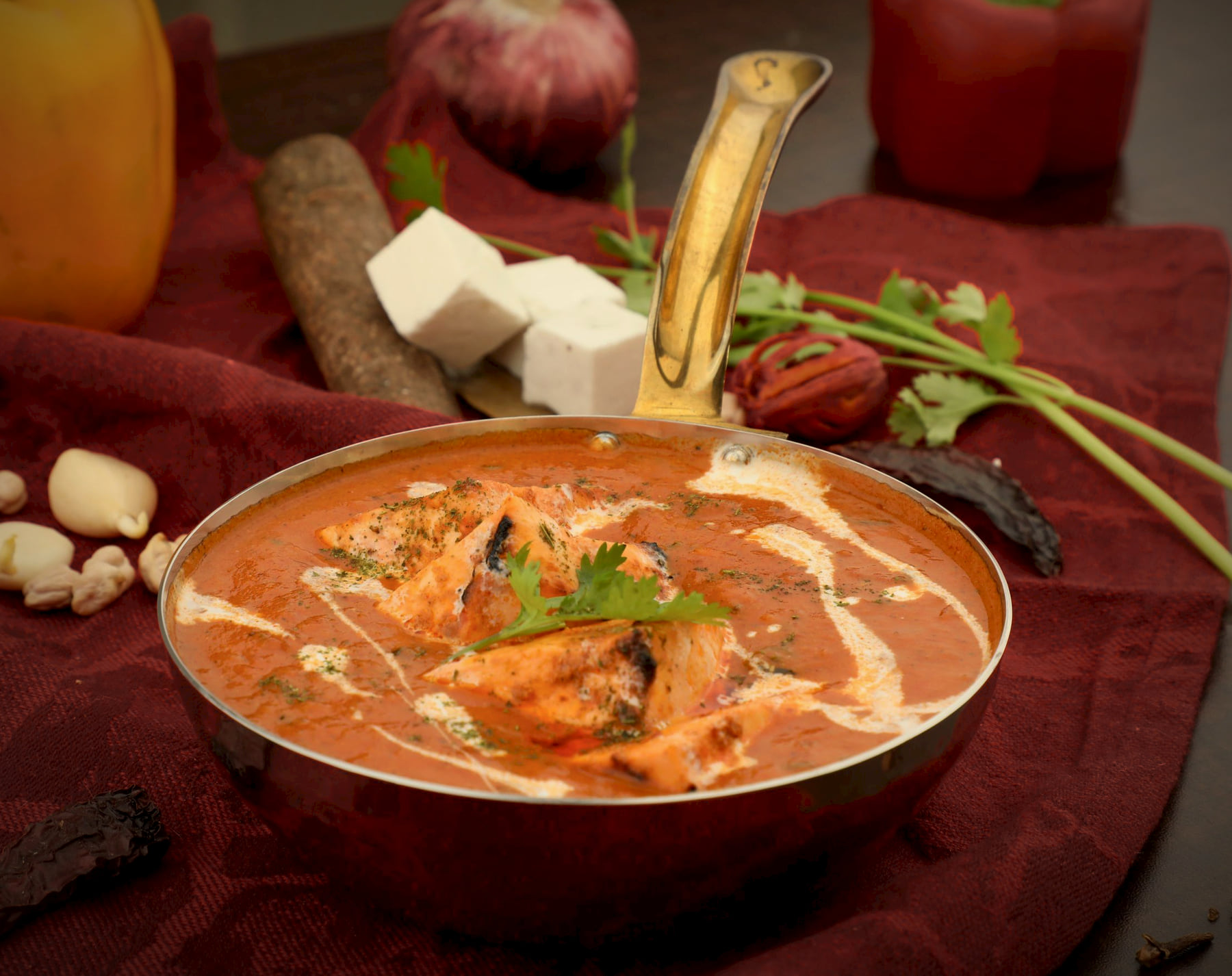
  2. Paneer tikka in a spiced tomato masala in a brass-handled pan, with fresh paneer behind

    Familiar Favourite

    Paneer Tikka Masala

    Char first, then warmth.

    Marinated paneer, taken to char, then folded into a warm, spiced gravy.

    In the kitchen
    The paneer is charred before it meets the masala, so the smoke carries through.
    Origin
    The tandoor, then the pan
    Pairs with
    Missi Roti
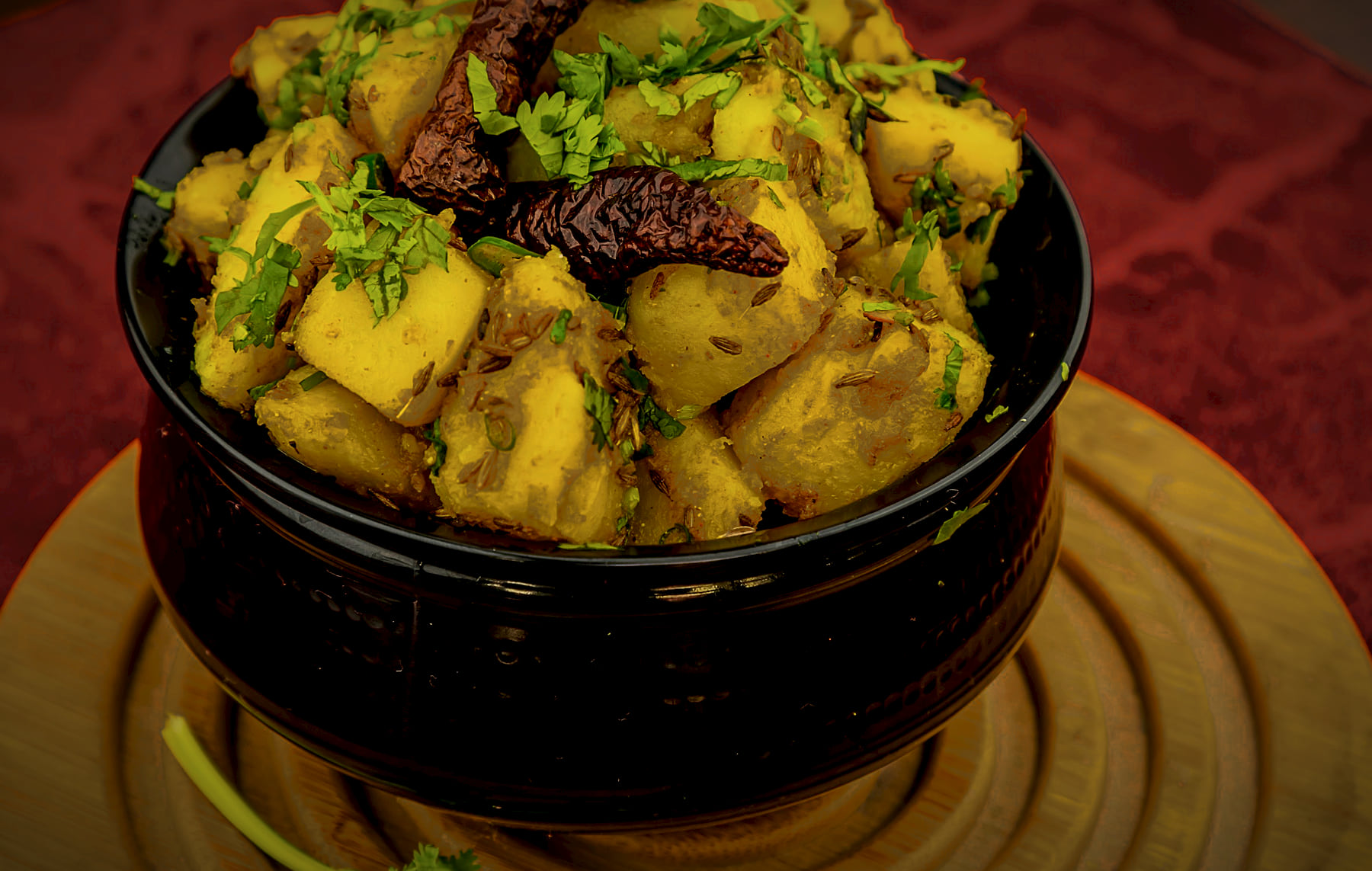
  3. Potatoes coated in whole spices and dried red chillies in a dark hammered handi

    Familiar Favourite

    Achari Aloo

    Sharp, bright, savoury.

    Potatoes cooked with the spices usually kept for the pickle jar: fennel, mustard, fenugreek and nigella.

    In the kitchen
    The pickling spices are bloomed first, so every piece of potato carries them.
    Origin
    The pickle jar
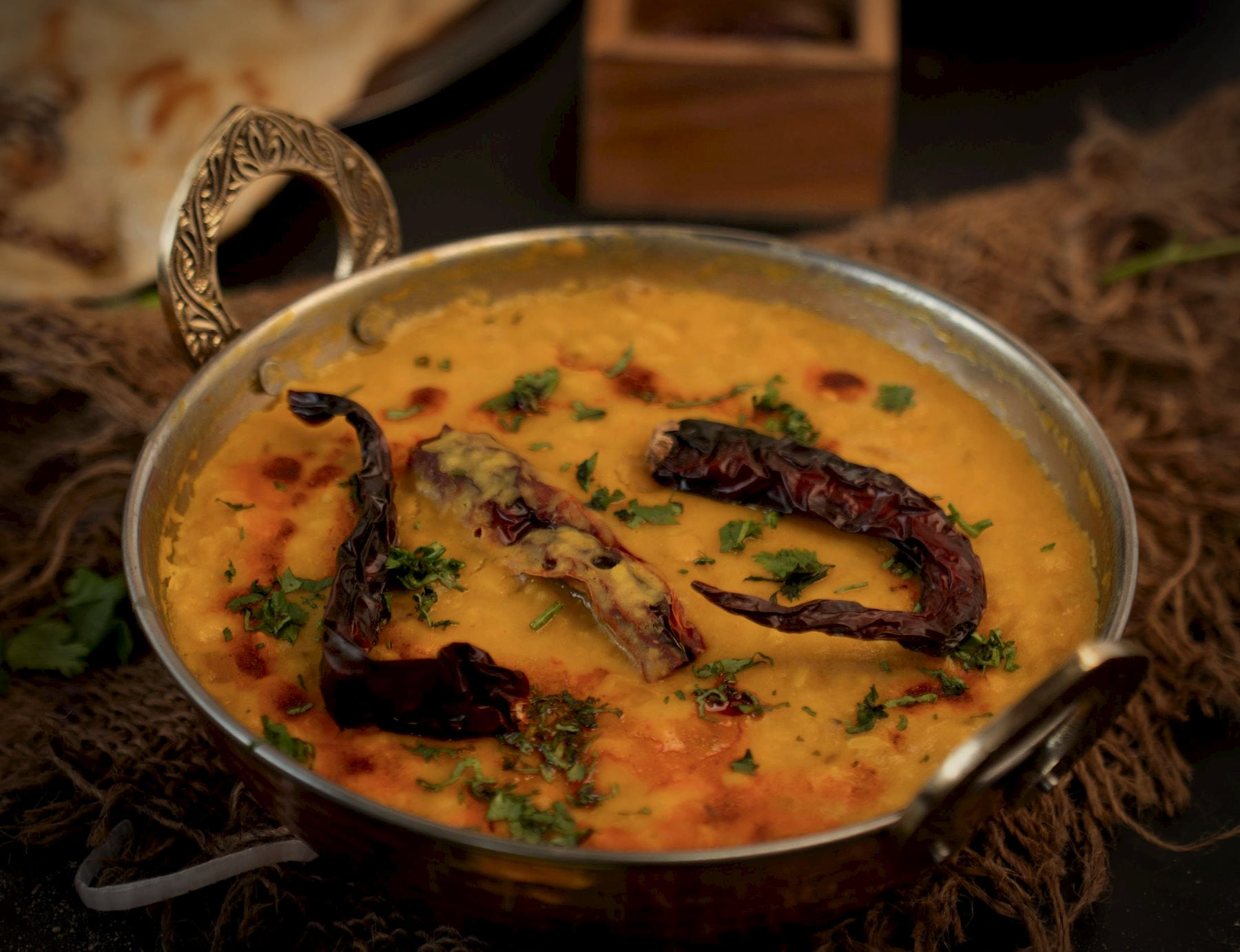
  4. Yellow dal with a tempering of whole dried red chillies in a brass-handled kadai

    Familiar Favourite

    Yellow Dal Tadka

    Comfort, then a crackle of tempering.

    The everyday dal, finished with a tempering poured over at the last moment.

    In the kitchen
    The tadka goes on at the end, while the ghee is still crackling.
    Origin
    The everyday North Indian kitchen
    Pairs with
    Jeera Basmati
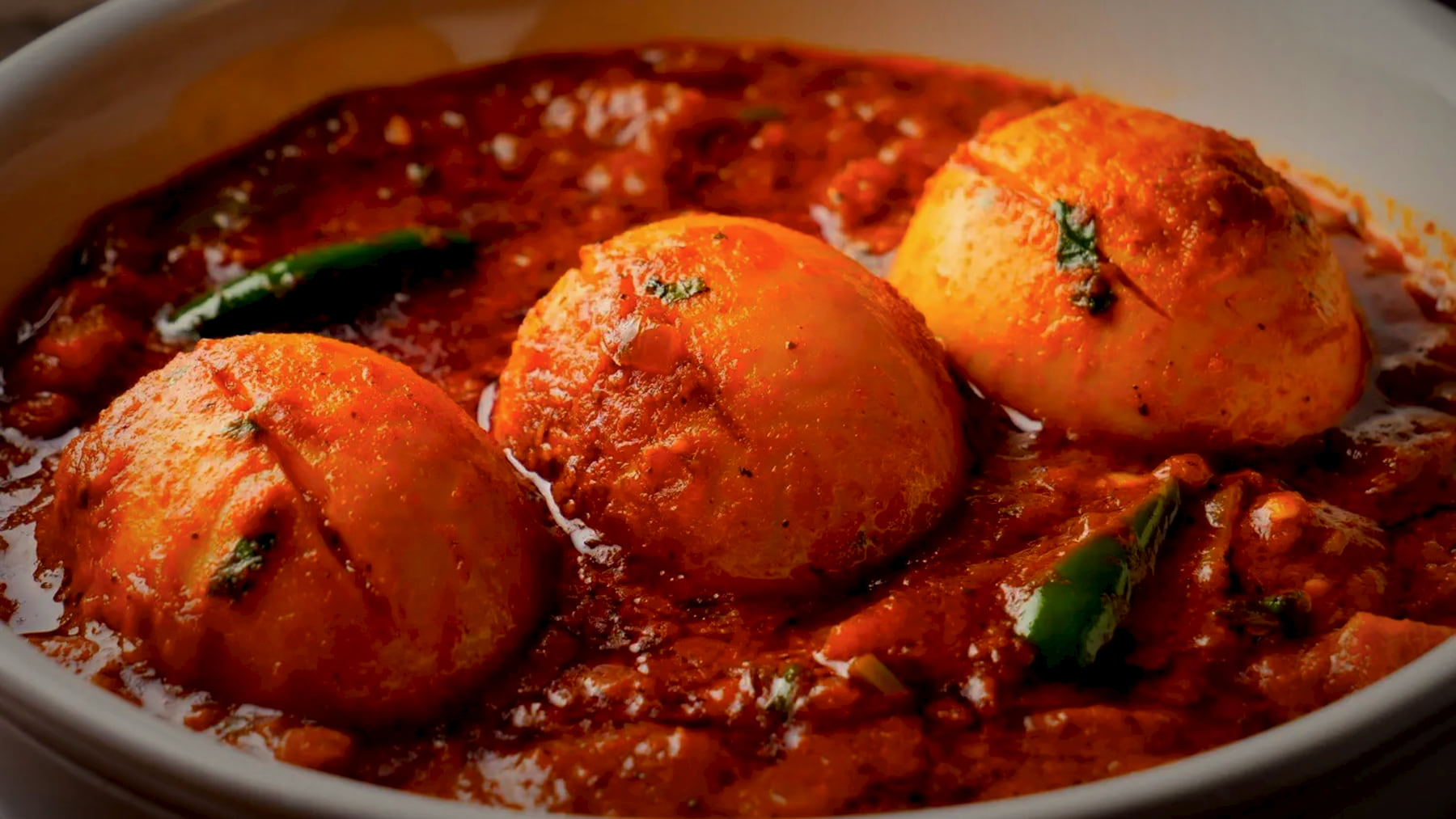
  5. Three scored boiled eggs in a rich red masala with green chillies

    Familiar Favourite

    Egg Curry

    Homely, warm, honest.

    Whole eggs in a warm, spiced masala. Homely, and honest about it.

    In the kitchen
    The eggs are scored so the masala reaches the centre.
    Origin
    Home cooking across the North

Collection III. Three dishes

Rice & Pulao

Long grains, handled with patience, to carry everything else on the table.

  1. Steamed Aged Basmati

    Familiar Favourite

    Long, separate, fragrant.

    Long grains, cooked to stand apart. The quiet partner to every gravy on this table.

    Long-grain basmati with coriander in a hammered copper handi
    In the kitchen
    Rinsed and rested before it is steamed, so each grain stays separate.
    Origin
    The quiet partner
    Pairs with
    House Black Dal
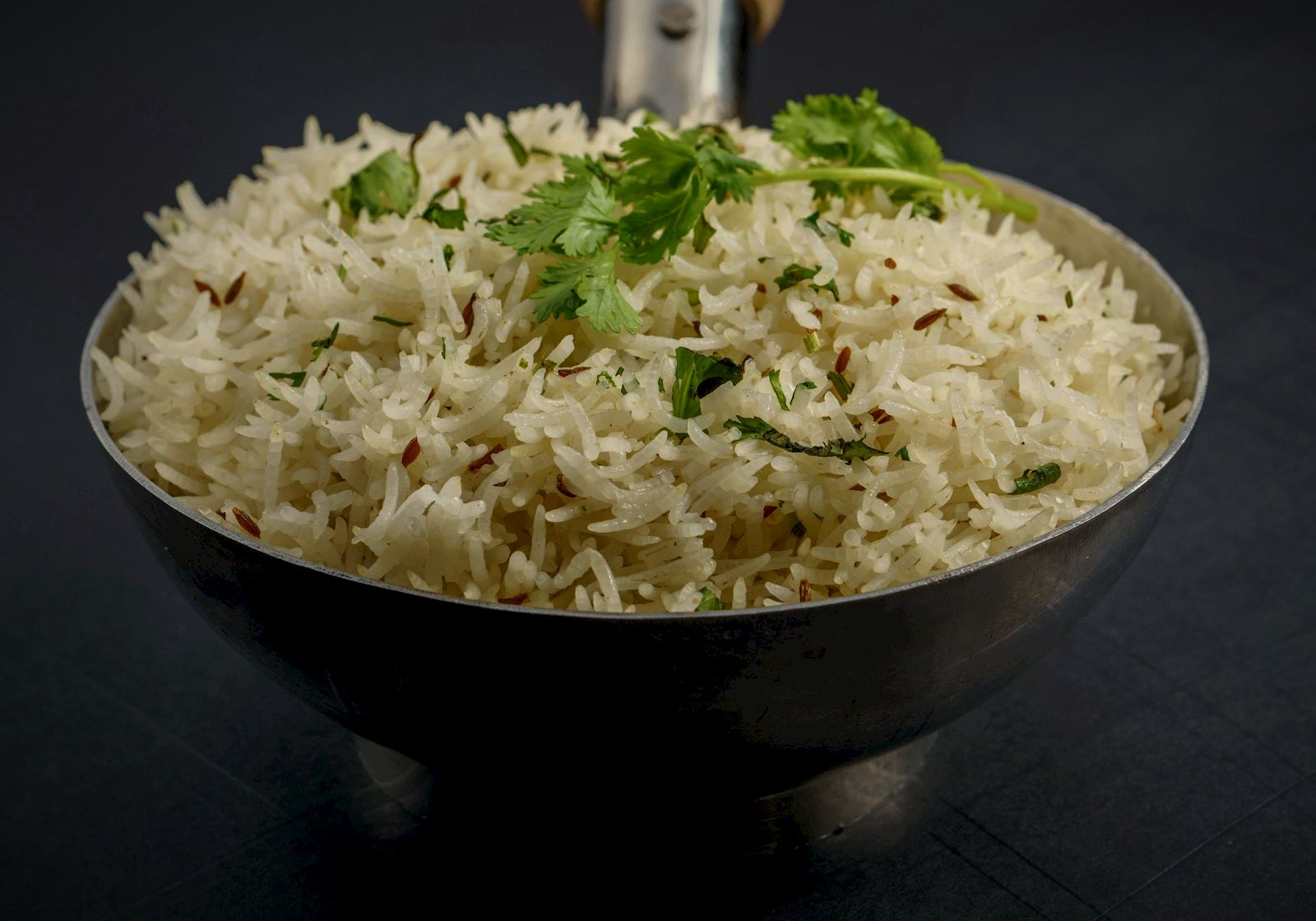
  2. Jeera Basmati

    Familiar Favourite

    Warm cumin, clean grain.

    Basmati tempered with cumin. Simple, fragrant, precise.

    Cumin-flecked basmati rice with coriander in a steel bowl on dark slate
    In the kitchen
    Cumin is toasted in ghee until it just darkens, then folded through.
    Origin
    Everyday North Indian rice
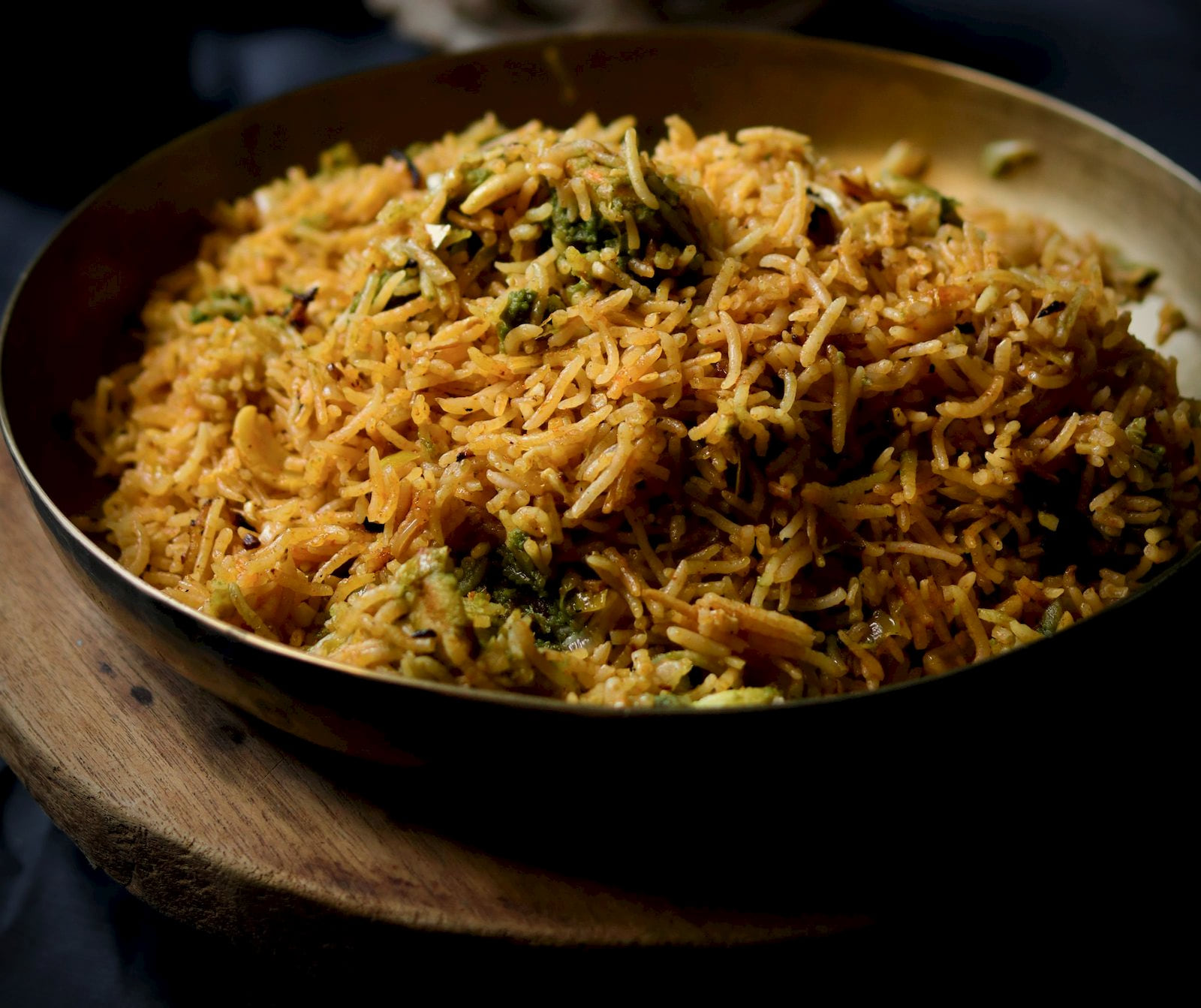
  3. Yakhni Pulao

    Regional

    Fragrant stock, whole spice, restraint.

    Basmati cooked in yakhni, a fragrant stock, in the manner associated with the kitchens of Awadh. Whole spices, used sparingly.

    Pulao with whole spices in a shallow brass dish, lit low from the side
    In the kitchen
    The rice cooks in the stock itself, so the fragrance is inside the grain.
    Origin
    Awadh
    Pairs with
    Lahori Paneer

Collection IV. Two breads

From the Tandoor

Bread from real heat. The most honest test of a kitchen.

Two flatbreads cooking above a glowing fire

Kitchen studyBread above live fire.

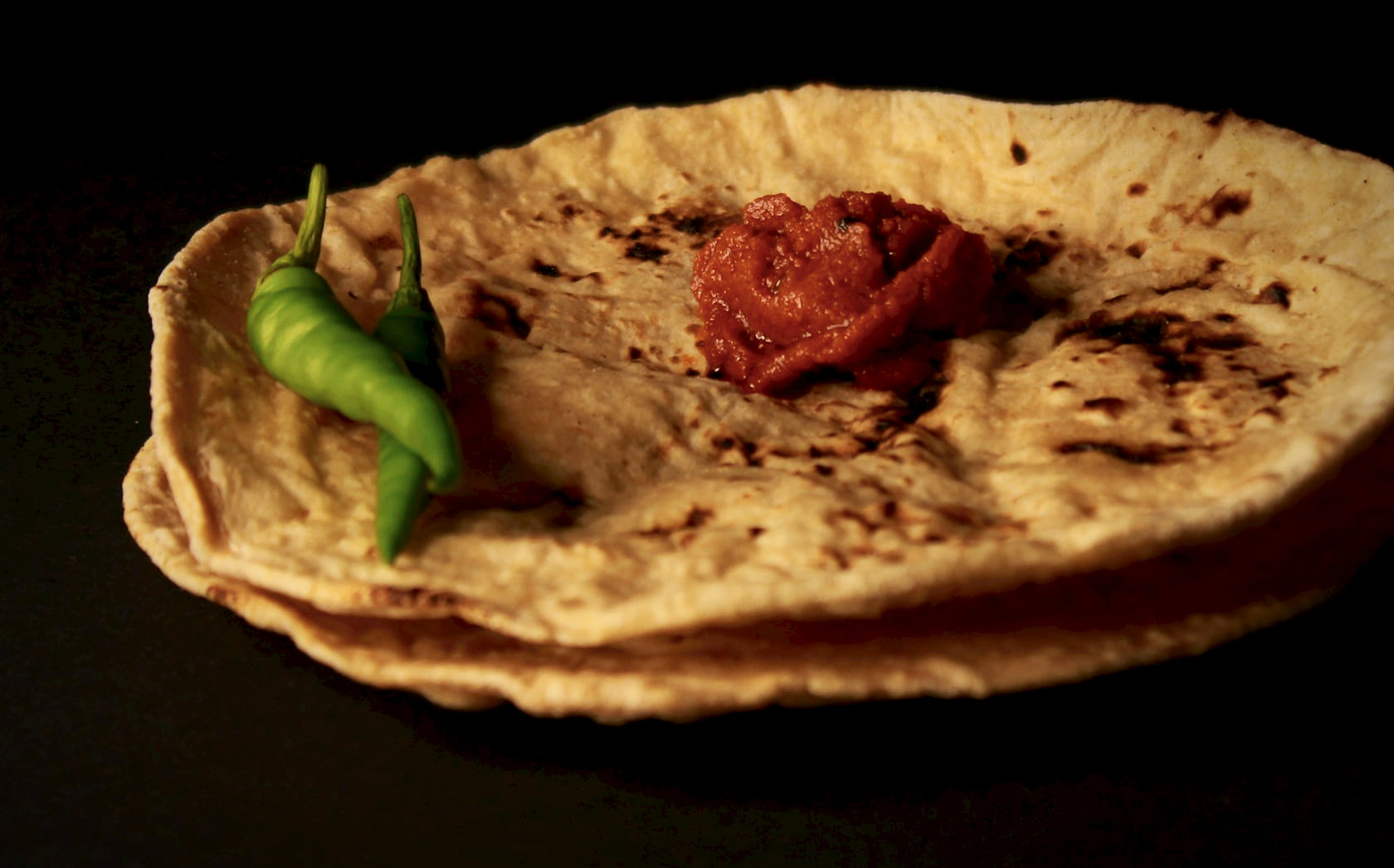
  1. Lightly blistered whole wheat rotis, stacked, with a green chilli

    01Familiar Favourite

    Tandoori Roti

    Blistered outside, soft within.

    Whole wheat, from the heat of the tandoor.

    In the kitchen
    Lightly blistered, never burnt, and brushed while it is still hot.
    Origin
    The Punjabi tandoor
    Pairs with
    House Black Dal
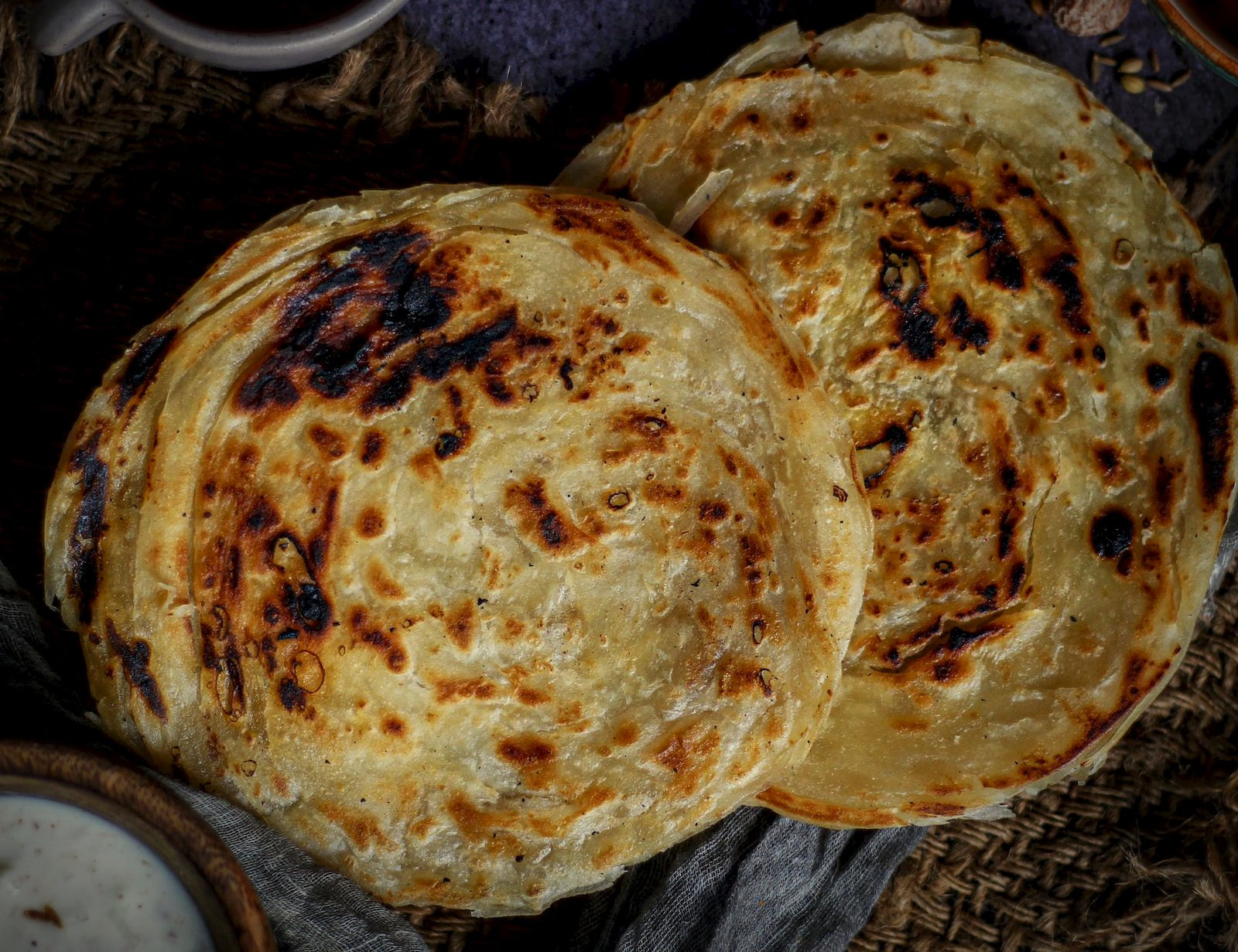
  2. Two layered flatbreads with charred spots and crisp edges, resting on dark linen

    02Regional

    Missi Roti

    Earthy gram flour, flecked with spice.

    Gram flour bread, flecked with spice. Earthy, savoury, made for gravies.

    In the kitchen
    Gram flour and whole wheat, with spice worked into the dough rather than onto it.
    Origin
    Punjab & Rajasthan
    Pairs with
    Paneer Nihari
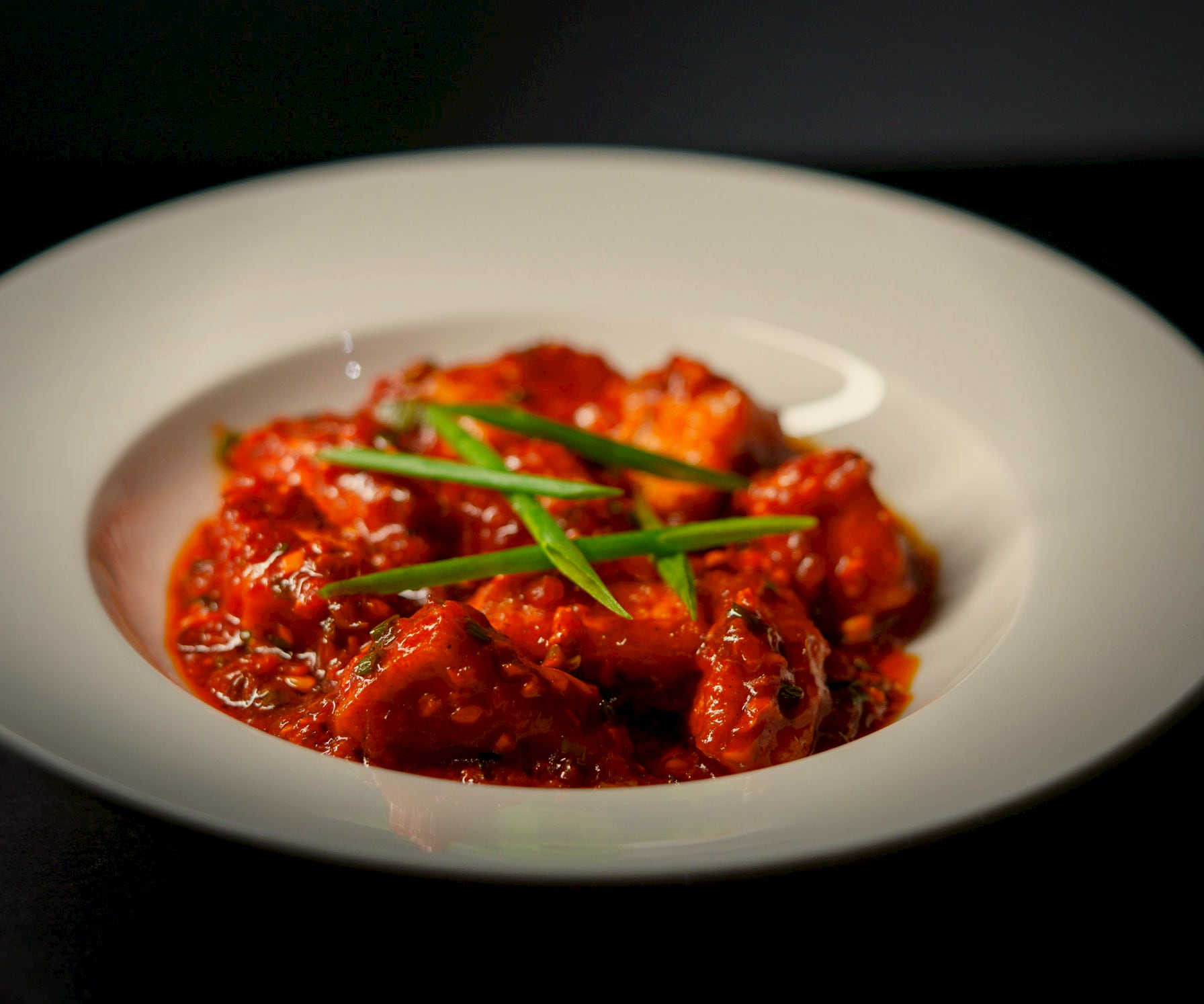
Paneer in a deep roasted red, semi-dry masala glossy with ghee, in a wide ivory bowl
Red chillies turning in a hot pan

Where the masala begins

VThe Guest Table

Occasionally, we travel beyond the North.

Coastal Ghee Roast Paneer

From
The northern table
To
Coastal Karnataka
Mangaluru and Kundapur

Roasted red chilli, glossy ghee, a dry, clinging masala.

Ghee roast belongs to the coast of Karnataka, to Mangaluru and Kundapur, where a deep red paste of roasted chillies and spices is cooked slowly in ghee. It is not a North Indian dish and we will never present it as one. It is here because it is extraordinary, and because a good table always has room for a guest.

In the kitchen
The chilli paste is cooked down in ghee until the fat itself turns red.
Classification
Guest Table
Pairs with
Steamed Aged Basmati

Ordering

For now, our table comes to you.

We judge a dish twice: when it leaves our kitchen, and when it reaches your table.